Wednesday, July 02, 2008

The Founding Fathers

The Declaration of Independence by John Trumbull

Who Were the Founding Fathers?


For those of you who have forgotten your history, Independence Day is the day the Declaration of Independence was ratified by the Continental Congress. We still had a long, hard slog through years of war to become a country, to write a Constitution, to elect a government - it was the day intent for freedom and liberty was stated. Today, commemorate the 56 brave men who stood up to oppression and tyranny. They risked everything for our future. Here are some of their stories.

Have you ever wondered what happened to the 56 men who signed the Declaration of Independence?

Five signers were captured by the British as traitors, and tortured before they died.

Twelve had their homes ransacked and burned.

Two lost their sons serving in the Revolutionary Army; another had two sons captured.

Nine of the 56 fought and died from wounds or hardships of the Revolutionary War.

They signed and they pledged their lives, their fortunes, and their sacred honor. Many lost their lives, more lost their fortunes, but none lost their honor.

What kind of men were they?

Twenty-four were lawyers and jurists, eleven were merchants, nine were farmers and large plantation owners; men of means, well educated, but they signed the Declaration of Independence knowing full well that the penalty would be death if they were captured.

Carter Braxton of Virginia, a wealthy planter and trader, saw his ships swept from the seas by the British Navy. He sold his home and properties to pay his debts and died in rags.

Thomas McKeam was so hounded by the British that he was forced to move his family almost constantly. He served in the Congress without pay, and his family was kept in hiding. His possessions were taken from him, and poverty was his reward.

Vandals or soldiers looted the properties of Dillery, Hall, Clymer, Walton, Gwinnett, Heyward, Ruttledge, and Middleton.

At the battle of Yorktown, Thomas Nelson, Jr., noted that the British General Cornwallis had taken over the Nelson home for his headquarters. He quietly urged General George Washington to open fire. The home was all but destroyed and Nelson died bankrupt.

Francis Lewis had his home and properties destroyed. The enemy jailed his wife and she died within a few months.

John Hart was driven from his wife’s bedside as she was dying. Their thirteen children fled for their lives. His fields and gristmill were laid to waste. For more than a year, he lived in forests and caves, returning home to find his wife dead and his children vanished.

All gave their fortunes to the fight for Independence.

Some of us take our liberties for granted, but we shouldn’t. So, take a few minutes while enjoying your 4th of July holiday and silently thank these patriots. It’s not much to ask for the price they paid. Then, thank the many down through our history who have fought for us, thank the men and women who are serving our country today, who fight for us, so that we will not have to.

Wednesday Hero ~ LCpl Julie Martinez


Click Image For Full Size
Lance Cpl. Julie Martinez
U.S.M.C

Lance Cpl. Julie Martinez, a radio operator with the 31st Marine Expeditionary Unit, checks the communication capabilities during a backload of Marines from Combat Logistics Regiment 3 to the USS Essex June 9.


These brave men and women sacrifice so much in their lives
so that others may enjoy the freedoms we get to enjoy everyday.
For that, I am proud to call them Hero.

We Have Every Right To Dream Heroic Dreams.
Those Who Say That We're In A Time When There Are No Heroes,
Just Don't Know Where To Look


This post is part of the Wednesday Hero Blogroll. For more information about Wednesday Hero, or if you would like to post it on your site, you can go here.

Wednesday Hero Logo

Tuesday, July 01, 2008

35th Anniversary of the All Volunteer Force


35 Years of a Volunteer Force

July 1, 1973 the United States Military became an all volunteer force. Gone were the days of the conscription 0r 'The Draft'. For 35 years, through much of the Cold War, Panama, Greneda, Bosnia, Kosovo, Desert Storm, Somalia, and the Great War on Terror, every member of the military has been a volunteer. They stood up and said "Take Me." They raised their hands to take the oath and said "I mean it."

I remember July 1, 1973 vividly. There were many celebrations by the anti-war crowds, just as there were celebrations by the military crowds, though for quite different reasons. What started as a political victory for the anti Vietnam war crowd, has become the backbone and strength of our current military. I remember people believing that an all volunteer force would cause the disappearance of the military. What has happened has been quite different. It has created a strength of people that begins with them wanting to be where they are, united for a common goal. It has created a higher rate of re-enlistments and career soldiers.

I am proud to know so many of these volunteers. I was deeply touched when my favorite soldier shared that he had re-enlisted for life at Christmas while standing in the vast sands in the middle east. This SFC is on his second tour, which he volunteered to do. He is also a Reservist and gives up a very lucrative job and life to spend another year in the sandbox.

These are smart, ambitious people who are giving their lives to something larger than themselves. These are amazing men and women. They have made a commitment to our country... to each of us... to keep us safe and free. It is with the deepest gratitude that I say THANK YOU!

Monday, June 30, 2008

Child of Berlin Airlift Remembers

Mercedes Wild – subject of the children's book, "Mercedes and the Chocolate Pilot” – signs books at Aukamm Elementary School on U.S. Army Garrison Wiesbaden, Germany.
U.S. Army photo by Karl Weisel


Child of Berlin Airlift Remembers

By Karl Weisel
Special to American Forces Press Service

WIESBADEN, Germany, June 25, 2008 – A storybook came alive for German and American youth here when the tale’s lead character appeared in person.

After having collaborated on a video project for the children’s story, “Mercedes and the Chocolate Pilot,” in celebration of the 60th anniversary of the Berlin Airlift, students from Aukamm and Hainerberg elementary schools on U.S. Army Garrison Wiesbaden and the nearby Nauheim Grundschule were treated to a visit by the book’s real-life title character.

“I’m of course much older than years ago,” said Mercedes Wild with a smile as she described what it was like to be a 7-year-old child in post-war Berlin during the Soviet blockade from June 1948 to May 1949.

“We had little to eat,” Wild told her young audience, explaining that the western section of Berlin had very little farmland. And though the Soviets tried to entice Berliners over to the eastern side with promises of food, those in the west knew better than to sacrifice their freedom. When Allied airplanes began delivering coal, food and other supplies, Wild said she was terrified bombs would once again fall on her city. “I asked my grandmother if we should go downstairs in the cellar once more, but she told me this time the planes were bringing food and coal.”

Wild and her husband, Peter, described the brutal winter of 1948-1949. “We had no good clothes, no shoes,” she remembers. “But we didn’t fear the cold; we feared the Russians.”

When a plane crashed barely 200 meters from her house, killing the two pilots, Wild recalled everything in sight being coated in white flour, adding that as a child her thoughts were: “It might have been our house … that the plane hit.” And she thinks back to “being very sleepy in the mornings because of the noise of the airplanes in the night.”

Peter told the German and American students that the flights between Berlin and other cities in Germany were only the tip of the iceberg. “The real airlift stretched all across the United States and the Atlantic Ocean, using airplanes, trains, trucks and ships,” he said, describing the incredible logistical effort involved in moving massive quantities of supplies to Berlin.

He also described the phenomenal achievement of building Berlin’s Tegel Airport from scratch as the airlift was in progress. “Ten thousand women built a new airport in three months,” he said.

As recounted in the story by author Margot Theis Raven, a young Mercedes watched as planes flew overhead, wishing that one day the tiny parachutes bearing chocolate would find their way into her hands. After completing a suggestion by her grandmother to write the “candy bomber,” Lt. Gail Halvorsen, Wild eventually received a response explaining the pilot was unable to spot her house and her white chicken from the air. Tucked in the envelope was peppermint gum. Although she gave away the treat, having never before tasted anything like it, “The most important thing for me was this letter. … Chocolate and chewing gum were unknown to us.”

Having lost her father during World War II, Wild said, she looked to Halvorsen as a surrogate dad. “My father was also a pilot in World War II, and he [went missing] early in the war. My mother and I didn’t know what happened to him. … The chocolate uncle became a symbol of my father.”

In the early 1970s, when Halvorsen was visiting Berlin, Peter approached the American with the treasured letter he had written to Wild more than two decades earlier. The meeting evolved into a long-term friendship with the Halvorsen and Wild families that continues today.

And it grew into a partnership program between the Gottfried Keller Gymnasium, where Peter taught in Berlin, and Provo High School, near Halvorsen’s home in Utah.

The Wilds also explained to the children how they learned “American, not English” after the war by listening to American Forces Network Radio. “The best teacher for German kids to learn [the vernacular] was AFN,” Peter recalled.

In 1997, during the 50th anniversary of the airlift at Templehof Airport in Berlin, Wild was invited on stage alongside Halvorsen and President Bill Clinton, where she had “the honor to say thank you on behalf of the people of Berlin.” “Without the help of the Americans [and the Allies], I wouldn’t be here,” Wild said. “I wouldn’t be alive to enjoy the freedom you brought to us Germans.”

(Karl Weisel works in the U.S Army Garrison Wiesbaden Public Affairs Office.)


More information on the Berlin Airlift:
A beautiful presentation by the Department of Defense: http://www.defenselink.mil/home/features/2008/0508_berlin/index.html

Previous stories:
The Candy Bomber - http://gazingattheflag.blogspot.com/2008/05/face-of-freedom-col-gail-s-halvorsen.html

The Airlift - http://gazingattheflag.blogspot.com/2008/05/history-is-our-stories-berlin-airlift.html
Berlin Airlift Veterans Remember - http://gazingattheflag.blogspot.com/2008/06/berlin-airlift-veterans-remember-60.html

Saturday, June 28, 2008

Freedom ~In the Eyes of a Child


U.S. Army Staff Sgt. Joseph Reinsburrow holds an Iraqi child during a joint U.S. and Iraqi military police mission to distribute toys and school supplies at a girls' school in Hurriyah, Iraq, June 12, 2008. Reinsburrow is assigned to the 64th Military Police Company, Fort Hood, Texas.
U. S. Army photo by Sgt. Daniel Blottenberger

Friday, June 27, 2008

Berlin Airlift Veterans Remember 60 Years Ago


(Click to enlarge)

Air Force Staff Sgt. Dub Southers poses outside a Celle Air Base barracks during a break in his Berlin Airlift duties. Courtesy photo


Berlin Airlift Veterans Return to Germany for Anniversary
By Air Force Staff Sgt. Julie Weckerlein
Special to American Forces Press Service

WASHINGTON, June 27, 2008 - For 50 years, Dub Southers recalled the grueling hours he worked at an air base in northern Germany at the start of the Berlin Airlift, not the historical significance of what he helped to achieve as a flight engineer and crew chief.

He remembered well the coal being shipped in from local coal fields, the 196 missions he flew over Berlin and being a 20-year-old Air Force staff sergeant keeping the C-54 Skymaster aircraft flying. "Coal was our basic cargo," said Southers, now 81 and living in Texas. "Occasionally, we flew flour, but I can't recall anything other than coal."

It wasn't until 1998 that Southers started really thinking about the importance of the airlift mission, which lasted from June 1948 to May 1949 and provided vital resources to the German city cut in half by Soviet rule, he said.

As the anniversary approached, he asked his daughter to search online for activities happening in Berlin. Her search found the Berlin Airlift Veterans Association, and he became its secretary.

He ended up visiting Germany that year for the 50th anniversary, and he and seven other association members have returned to take part in 60th anniversary observances.

They will re-enact the first flight of the airlift, he said, and visit the memorial at Rhein-Main Air Base, get on a C-47 and fly the corridor from Frankfurt to Templehof Air Base in Berlin, where there will be another memorial service.

"I was amazed [in 1998] how much progress had been made in the Western sector of Berlin, and how little had been made in the Eastern Zone at that time," he said. "By the time I went again in 2004, it was better, though, and quite a bit more had been done."

In November 1948, Germany was much different. Southers arrived at Celle Air Base from his duty station at McChord Field, Wash., as part of the initial group of airmen sent in for the airlift mission. The Memphis, Tenn., native said he couldn't believe the amount of fog that blanketed the area.

"That was really surprising to me," he said. "It was actually a very nice area. After a few months, when we had enough people, we were allowed to go off base into the town, where there were actually some good places to eat and catch a show." The area hadn't been bombed. "I heard that the British monarchy actually owned a castle in the area," Southers said, "and they didn't want that destroyed."

Those short trips to the city were a brief respite from the busy work hours that dominated Southers' time at Celle Air Base. The base was located near coal fields, which were connected to the base. A platform was built right onto the bays along the flightline so the coal could be stacked and supplied to the aircraft right away.

The team of airmen was very short of personnel, especially mechanics, Southers recalled.

"When I first got over there, we were working around the clock, 12 [hours] on, 12 off, seven days a week. They eventually hired local German aircraft mechanics who worked alongside us. I remember them being very good, as they were older and more experienced."

Southers returned to the United States in July 1949. He left the military after three years, earned a degree in chemical engineering and settled down with his family. He now works as part-owner of a small software company.

"I didn't even think about [the Berlin Airlift] much," he said. "I'm not even sure that my family knew I was involved in it until a few years before the 50th anniversary. Of course, the history books didn't have much about it either."

He said by observing the anniversary and remembering the 31 Americans who died in aircraft accidents during the mission, Americans learn about the importance of the Berlin Airlift.

"At this point, I'm very proud of being a part of it," he said. "I know that we affected history big-time. We call it the first victory of the Cold War. Because of the Berlin Airlift, Europe is free. All of Europe would have ended up communist if we were run out."

He said during his first return to Germany, Germans actually approached him with appreciation.

"We were wearing caps that identified us as Berlin Airlift veterans, and I don't know how many times we were stopped and thanked for what we did," he said.

He also pointed out that the Air Force today and the way it does business is shaped by the Berlin Airlift mission.

"The cargo aircraft today was designed based upon lessons we learned," he said. "At least, that's what they tell us. The technology has changed, but a lot about the airlift mission today is based upon what we learned back then."

Today's Air Force senior leaders agree the Berlin Airlift was a huge moment for the service.

"The Berlin Airlift was a seminal moment for airpower and a pivotal event in world history," said Gen. Duncan J. McNabb, the Air Force vice chief of staff, during a recent ceremony honoring another Berlin Airlift airman, retired Col. Gail Halvorsen, also known as "the Candy Bomber" for his drops of candy and chocolate for local children. "It showed the deep compassion of the American people and sent a message of hope and liberty to Berliners and to freedom-loving people around the world."

Southers said he does not feel like a hero, despite the pride he and fellow airmen share about their role in the mission.

"The real heroes were the German people in Berlin who suffered the things they put up with in the Eastern Zone," he said. "People just disappeared under the communist rule, because they were speaking out for freedom. We provided what they needed to get by. They are the ones who held out and persevered."

More information on the Berlin Airlift:
A beautiful presentation by the Department of Defense: http://www.defenselink.mil/home/features/2008/0508_berlin/index.html
Previous stories:

Thursday, June 26, 2008

Saving the Planet with George Carlin

George Carlin passed away earlier this week.

This is a wonderful and funny performance.

Thanks for the laughter, George!

Wednesday, June 25, 2008

Wednesday Hero ~ SSG Jude Voss

Staff Sgt. Jude Voss
1st Battalion, 3d Special Forces Group (Airborne)
U.S. Army

His courage illustrates a combat truth to these veterans of World War II, Korea and Vietnam: Soldiers arenʼt thinking about glory or ideals in the midst of a battle. They fight for the men to the left and right of them.

And that's just what SSgt. Jude Voss did in September of 2006 when, without consideration to his safety, SSgt. Voss ran through enemy fire and the burning, smoking debris of a truck to rescue Sgt. 1st Class Greg Stube. Sgt. Stube was in a bad way. Uniform burning and legs busted, but because of the actions of SSgt. Voss he is alive today.

Because of his actions that day, SSgt. Voss was nominated for and received the Silver Star Medal for conspicuous gallantry and intrepidity in action. "I did what everybody out there would do" Voss said. "I was just the closest guy."

You can read SSgt. Voss's story here.


These brave men and women sacrifice so much in their lives
so that others may enjoy the freedoms we get to enjoy everyday.
For that, I am proud to call them Hero.

We Have Every Right To Dream Heroic Dreams.
Those Who Say That We're In A Time When There Are No Heroes,
They Just Don't Know Where To Look


This post is part of the Wednesday Hero Blogroll. For more information about Wednesday Hero, or if you would like to post it on your site, you can go here.

Wednesday Hero Logo

Thursday, June 19, 2008

Welcome Home!

06/17/2008 - A 5-year-old girl watches as U.S. Airmen return to McCarran International Airport in Las Vegas, Nev., June 17, 2008. Thirty-two Airmen assigned to the 99th Security Forces Group, Nellis Air Force Base, Nev., completed a six-month deployment to Camp Bucca, Iraq.
DoD photo by Senior Airman Larry E. Reid Jr., U.S. Air Force. (Released)

This is a scene repeated in airports across this nation every day -
troops leaving and troops coming home.
Thank you all and welcome home!


I will be away from the computer for a few days - thought this was a lovely picture to leave you with!

Wednesday, June 18, 2008

Wednesday Hero ~ Capt Jamie Riddle

Cpt. Jamie Riddle
Click Image To View Full Size

U.S. Air Force

Capt. Jamie Riddle(Left) and an Iraqi Flight Instructor School student walk to the flightline before a recent mission at Kirkuk Air Base, Iraq. The Iraqi air force recently established the school for Iraqi pilots. Captain Riddle is an instructor pilot with the 52nd Flying Training Squadron


These brave men and women sacrifice so much
in their lives so that others may enjoy the freedoms we get to enjoy everyday.
For that, I am proud to call them Hero.


We Have Every Right To Dream Heroic Dreams.
Those Who Say That We're In A Time When There Are No Heroes
Just Don't Know Where To Look


This post is part of the Wednesday Hero Blogroll. For more information about Wednesday Hero, or if you would like to post it on your site, you can go here.

Wednesday Hero Logo

Monday, June 16, 2008

Laura Bush Surprise Visit to Afghanistan

First Lady Laura Bush visits servicemembers at Bagram Air Base, Afghanistan, to thank them for their efforts, June 8, 2008.
U.S. Army photo by Pfc. Christina Sinders


New Zealand soldiers perform a traditional warrior’s dance - Powhiri - Sunday during a welcoming ceremony for Mrs. Laura Bush at the Bamiyan Provincial Reconstruction Team Base in Afghanistan’s Bamiyan province.
White House photo by Shealah Craighead
Mrs. Laura Bush is joined by Ihsan Ullah Bayat, top let, and young Afghan girls during a tour of the construction site of the Ayenda Learning Center Sunday, June 8, 2008, in Bamiyan, Afghanistan.
White House photo by Shealah Craighead

Mrs. Laura Bush shakes hands with President Hamid Karzai of Afghanistan, Sunday, June 8, 2008, during their press availability at the presidential palace in Kabul.
White House photo by Shealah Craighead


Mrs. Laura Bush speaks with faculty and students from Afghan universities and international schools, Sunday, June 8, 2008, during an unannounced visit to Kabul. Attending the meeting were representatives from Kabul University, American University of Afghanistan, International School of Kabul and the Women's Teacher Training Institute.
White House photo by Shealah Craighead

Mrs. Laura Bush smiles as she meets Sunday, June 6, 2008, with female graduates of the Police Training Academy in Bamiyan province in Afghanistan. With her is Bamiyan Governor Habiba Sarabi.
White House photo by Shealah Craighead

Mrs. Laura Bush, to the right of the podium, is introduced June 9, 2008 by the Bamiyan major as workmen prepare to break ground for the Bamiyan Bazaar road project in Afghanistan.
White House photo by Shealah Craighead
Mrs. Laura Bush greets local businesswomen as she tours the marketplace of the Arzu and Bamiyan Women’s Business Association on June 9, 2008 in Afghanistan. The carpets, embroidery and other Afghan wares are all made by women.
White House photo by Shealah Craighead

On June 8, 2008, First Lady Laura Bush made a surprize visit to Afghanistan. It was her third visit to Afghanistan. She visited with our troops at the Bagram Air Base, and during her day-long visit made stops in the Bamyan province and Kabul as well as Bagram Air Base.

"From overseeing hospitals to responding to [improvised explosive devices], your efforts are critical to our mission in Afghanistan," Bush said. "On behalf of President Bush and a grateful nation, thank you very much for your service to the United States of America. Every day, you risk your lives to protect the freedom that we hold so dear." Bush spoke to a crowd of several hundred in a large hangar and shared a few observations about the signs of progress that she had seen in Afghanistan throughout the day. "As you go about your daily duties, you are brining opportunity and security to the people of Afghanistan," she said.

In Bamyan, Mrs. Bush visited a Police Training facility, an orphanage, and a road construction project. She took her tour with Governor Sarabi, who is Afghanistan's only female governor. "All of these encouraging stories and all of these terrific things I saw today have been made possible by your efforts, and the efforts of the U.S. military," Bush said. Bush then met with members of a New Zealand-led provincial reconstruction team, who greeted her with a traditional war dance, complete with spears and war paint. "I can only imagine what the Secret Service thought, but their performance truly highlights the international makeup of security forces here in Afghanistan."

In Kabul, Mrs. Bush met with students from Kabul University, the Women's Teacher Training Institute, the American University of Afghanistan, and the International School of Kabul.

Thank you Mrs. Bush for a glimpse into the progess in Afghanistan that the media don't bother to report on. I am so proud of what we have accomplished there.


Saturday, June 14, 2008

Flag Day ~ Flags Across America

Flag Day ~ June 14


Fort McHenry
The sight that inspired Francis Scott Key
to write the poem
The Star-Spangled Banner


Iwo Jima - Marine Memorial


The Flag at Arlington House
Arlington National Cemetery


The Flag at the National Archives


The 50 Flags of the States
Washinton Monument


Fredricksburg National Cemetery


The Flag at the Stonewall Jackson Shrine
The site where he died.


Flag at Petersen Gardens in Oregon
Mr. Petersen scoured the desert for rocks and glass and built some incredible stuctures from them. This flag has 48 stars.


World War II Memorial


Flag at Fort Meade Parade Grounds


Flag at Vietnam War Memorial
Pueblo, Colorado


Flag at the Painted Hills
John Day National Monument


Flag at Home
Summer and Winter


Photos from my personal collection and travels

Friday, June 13, 2008

Happy 233rd Birthday U. S. Army

Two hundred and thirty-three years ago, the United States Army was established to defend our Nation. From the Revolutionary War to the Global War on Terror, our Soldiers remain Army Strong with a deep commitment to our core values and beliefs. This 233rd birthday commemorates America’s Army – Soldiers, Families and Civilians – who are achieving a level of excellence that is truly Army Strong both here and abroad. Their willingness to sacrifice to build a better future for others and to preserve our way of life is without a doubt, the Strength of our Nation. -From the Army Birthday site http://www.army.mil/birthday/233/

Since June 14, 1775, the magnificent Soldiers, Families and Civilians of America's Army have sacrificed personal comfort and safety so that others can live in freedom. Our sacrifices have preserved our way of life, built a better future for others, and led our nation to victory over our enemies. -From the Army Leadership http://downloads.army.mil/docs/2008armybdaymessage.pdf

Happy Birthday to the U. S. Army. Thank you for keeping our country safe and free. God Bless you all!

Tuesday, June 10, 2008

Wednesday Hero ~ SPC Jeffrey A Williams

Army Spc. Jeffrey A. Williams
20 years old from Warrenville, Illinois
Support Squadron, 3rd Armored Cavalry Regiment,
Fort Carson, Colorado
September 5, 2005
U.S. Army

SPC. Jeffery A. Williams was killed in action when an IED was detonated near his combat patrol in Tal Afar, Iraq. SPC Williams served as a combat medic. He told His mother, Sandra Smith, how much he looked forward to leaving in February. “He said they were at war and he was living in hell,” she said. “He was supportive of (the mission), but he got tired of that life over there.” He always knew he wanted to be in the military, and he also wanted to go to medical school and become a cardiologist, to marry his fiance, Stacey Kuhn, and have children.

Your time with us was far too short
Dealing with your loss will be hard,
When I think about what this world has lost
I want to just shut out the world and cry,
But I will not do that.
Because you gave your life for something much greater than you or I
So, I will remember you as the Hero that you are
And never let what you did in your life cut short be forgotten
And that is the best way I know to honor you


These brave men and women sacrifice so much in their lives
so that others may enjoy the freedoms we get to enjoy everyday.
For that, I am proud to call them Hero.

This post is part of the Wednesday Hero Blogroll. For more information about Wednesday Hero, or if you would like to post it on your site, you can go here.

Wednesday Hero Logo

Monday, June 09, 2008

Walter Reed Transport Hospital

The newly unveiled Patient Evacuation Vehicle idles in front of Walter Reed Army Medical Center in Washington, D.C., June 5, 2008. One of an expected three-vehicle fleet, this PEV -- a semi-trailer-sized hospital on wheels -- will make wounded soldiers' ride to Walter Reed safer and smoother than the buses they slated are to replace.
Defense Dept. photo by John J. Kruzel


Army Maj. Gen. Carla G. Hawley-Bowland, commander of North Atlantic Regional Medical Command and Walter Reed Army Medical Center, left, and Army Col. Patricia Horoho, commander of the Walter Reed Health Care System, center, give Army Secretary Pete Geren a tour of a Patient Evacuation Vehicle. Unveiled June 5, 2008, during a ceremony at Walter Reed Army Medical Center in Washington, D.C., the PEV is a semi-trailer-sized hospital on wheels that will make wounded soldiers' ride to Walter Reed safer and smoother.
Defense Dept. photo by John J. Kruzel


Walter Reed Rolls Out Safer, Smoother Transport for Wounded
By John J. Kruzel American Forces Press Service

WASHINGTON, June 5, 2008 - Walter Reed Army Medical Center rolled out a sophisticated new vehicle today that will make wounded soldiers' ride to the Army hospital safer and smoother.

The Patient Evacuation Vehicle, a semi-trailer-sized hospital on wheels that will phase out buses currently used to transport wounded troops to Walter Reed from Andrews Air Force Base, Md., was unveiled in a ceremony here.

"[This is] the latest innovation in our ongoing efforts to promote and preserve the health and strength of the world's finest servicemembers," Army Maj. Gen. Carla G. Hawley-Bowland, commander of North Atlantic Regional Medical Command and Walter Reed Army Medical Center, told the crowd on hand for the event.

Hawley-Bowland called the Patient Evacuation Vehicle, or PEV, an "incredible leap forward" in the care and transport of injured soldiers. The PEV fits up to 12 ambulatory and 16 nonambulatory patients, more than three times the capacity of the buses currently in use.

By the end of summer, the fleet is expected to grow to three PEVs, which boast smoother suspension than their Blue Bird bus counterparts, and allow hospital personnel to administer medical oxygen, air or suction to patients in need.

"They can transform this PEV into an intensive-care unit," Hawley-Bowland said. "This capability can save countless lives during the ride from Andrews to Walter Reed."

Army Secretary Pete Geren praised the leaders of industry and medicine who cooperated to help "make this dream a reality."

"Today, so much of medicine - when you get outside of the military - is all about business," he said. "But in the Army, medicine is all about service; it's all about taking care of soldiers, taking care of their families.

"Every day we pledge to do better than we did the day before," Geren continued, "and this is one more example of leadership at Walter Reed stepping forward to do more for the men and women who bear the battle for all of us in the United States."

Army Col. Patricia Horoho, commander of the Walter Reed Health Care System, said fielding the PEV is another example of the Army hospital's dedication to serving wounded warriors.

"This new Patient Evacuation Vehicle shows our commitment and the commitment of the Army to providing the best care for our patients before they arrive at the hospital [as] we welcome them home," she said.

In addition to transporting injured from military installations, Walter Reed will make its PEV fleet available to the National Capital Region if a mass-casualty event or other medical emergency occurs.

"[The PEV] also shows that we take our responsibilities to our neighbors in Washington very seriously in order to improve emergency medical preparedness, and to medically support the many special events that take place regularly in the national capital region," Horoho said.

Thursday, June 05, 2008

Book Review ~ Eight Lives Down by Chris Hunter

Eight Lives Down
The Story of the World's Most Dangerous Job
in the World's Most Dangerous Place
By Chris Hunter

Eight Lives Down is the story of a British bomb disposal expert, Major Chris Hunter, and his tour in Basra, Iraq. Major Hunter captures you in the first chapter and you know that this is a journey you will take with him - no matter how frightening or sad. It is a journey with true heroes and not for the faint of heart.

The journey with Major Hunter and his team tells of the bombers that infested Iraq - the bombs, the materials, the forensics and the dismantlement of them. I was hesitant to read it at first, knowing how many have lost their lives to the vile IEDs and their various forms (many of whom are on my side bar, including my friend SGT James Craig). But, I know that those who defuse these bombs have a story that is rarely told and a much higher rate of saved lives than lost lives.

I ended up in awe of the men in this profession. The precision and concentration with which they work is awe inspiring. The detail of knowledge that they must have is impressive, and major Hunter tells of the challenging school he had to attend to do his job. As the team becomes more successful, a price is put on his head. Camera crews show up at incidents to film him and the team hoping to capture images of things going badly. We learn about the forensics - the parts made in Iran, the style of the Chechen's or the IRA or others.

We are allowed a glimpse into the family that the team becomes - the shared laughter and sorrow. Although, I must admit that I did not understand all of the British slang, I did understand the meaning!

We have had some remarkable books come out of the Great War on Terror: Lone Survivor, Rule Number Two, On Call in Hell, My Men are My Heroes. This is definitely another one. It is an intense, but great read. It is well written, and you may find yourself holding your breath in parts of it. It flows as if a story is being told aloud, holding your attention through each sentence. I strongly recommend this book to anyone who wants to understand a part of the story on the ground in Iraq.

To Major Hunter and his team - Thank you - thank you so much for your service, your bravery, and your dedication. The world is a better place because of all of you and I am so grateful.

About the Author: CHRIS HUNTER joined the British Army in 1989 at sixteen. He was commissioned from Sandhurst at twenty-one and later qualified as a counter terrorist bomb disposal operator. He retired in March 2007 from the Defence Intelligence Staff, where he was the Ministry of Defence's senior IED intelligence analyst. He is a former chairman of the Technical Committee of the Institute of Explosives Engineers and continues to serve as a counter terrorism consultant. He works regularly with US military and law enforcement personnel, including a member of government agencies and the US Special Forces. He has served on numerous operations in the Balkans, East Africa, Northern Ireland, Colombia, and Afghanistan and was awarded the Queen's Gallantry Medal for his actions during his tour in Iraq.


Wednesday, June 04, 2008

Farewell and Walk With God ~ Corporal Jessica A Ellis

Corporal Jessica A Ellis
Farewell and Walk with God


Corporal Jessica A Ellis, 24, died May 11 in Baghdad, Iraq from wounds suffered when her vehicle hit an IED. She was a Health Care Specialist assigned to 2nd Brigade Special Troops Battalion, 2nd Brigade Combat Team, 101st Airborne Division (Air Assault), Fort Campbell, Kentucky, where she had been stationed since May 2005. Cpl Ellis was a daughter of Oregon.

Cpl Ellis attended Lakeview High School in Lakeview, Oregon in 2002. She attended Central Oregon Community College for two years, then enlisted in the Army in 2004. She is remembered at her high school as 'someone you couldn't help but love' - incredibly friendly to all. She ran track and cross country in high school and studied jazz, tap and ballet.

This was Cpl Ellis' second deployment to Iraq. She told her friends that 'she truly loved serving her country as a medic. She loved what she was doing."

Cpl Ellis received the following awards: Army Commendation Medal, Army Good Conduct Medal, National Defense Service Medal, Iraq Campaign Medal, Meritorious Unit citation, Global War on Terrorism Service Medal, Army Service Ribbon, Overseas Service Ribbon, Combat Medical Badge, Weapons Qualification, M4, Expert.
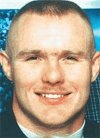
She is survived by the parents, Linda and Steven Ellis of Baker City, Oregon, a brother Cameron Ellis and his wife, Irena, of San Francisco, a sister, Amanda Ellis, of Corvallis, Oregon.

Our thoughts and prayers are with the Ellis family, Cpl Ellis' teammates and friends at this time.

Wednesday Hero ~ PO2 Adam F Kenney

Petty Officer 2nd Class Adam F. Kinney
Petty Officer 2nd Class Adam F. Kenney
U.S. Navy

Petty Officer 2nd Class Adam F. Kinney, a Navy Corpsman with Company E, 2nd Battalion, 24th Marine Regiment, Regimental Combat Team 1, gives an Iraqi Child a shot during a routine patrol. Kinney is assigned to Echo Co. for their seven-month deployment and will return to his parent command, 4th Tank Battalion in Fort Knox, Ky., upon his arrival.


These brave men and women sacrifice so much in their lives so that others may enjoy the freedoms we get to enjoy everyday. For that, I am proud to call them Hero.

This post is part of the Wednesday Hero Blogroll. For more information about Wednesday Hero, or if you would like to post it on your site, you can go here.

Wednesday Hero Logo

Thursday, May 29, 2008

When Pompous Becomes Idiotic


Garrison Keilior, once known fondly for his Lake Woebegone broadcasts on PBS, now writes an pompous editorial column for the Baltimore Sun. His Memorial Day column is not only pompous, but ignorant. He writes like a smarmy elistist who did not bother to gather any facts and was annoyed only by his own inconvieniece. If this editorial does not enrage you, I do question your patriotism. My comments are at the end.

http://www.baltimoresun.com/ - The Baltimore Sun

The disturbing roar of hollow patriotism
By Garrison Keillor
May 28, 2008

Three hundred thousand bikers spent Memorial Day weekend roaring around Washington in tribute to our war dead, and I stood on Constitution Avenue on Sunday afternoon watching a river of them go by, waiting for a gap in the procession so I could cross over to the Mall and look at pictures. The street had been closed off for them and they motored on by, some flying the Stars and Stripes and the black MIA-POW flag, honking, revving their engines, an endless celebration of internal combustion.

A patriotic bike rally is sort of like a patriotic toilet-papering or patriotic graffiti; the patriotism somehow gets lost in the sheer irritation of the thing. Somehow a person associates Memorial Day with long moments of silence when you summon up mental images of pilots revving up B-24s and infantrymen crouched behind piles of rubble steeling themselves for the next push.

You don't quite see the connection between that and these fat men with ponytails on Harleys. After hearing a few thousand bikes go by, you think maybe we could airlift these gentlemen to Baghdad to show their support of the troops in a more tangible way. It took 20 minutes until a gap appeared and then a mob of us pedestrians flooded across the street and the parade of bikes had to stop for us, and on we went to show our patriotism by, in my case, hiking around the National Gallery, which, after you've watched a few thousand Harleys pass, seems like an outpost of civilization.

There stood Renoir's ballerina in pale blue chiffon and Monet's children in the garden of sunflowers. And Mary Cassatt's "The Boating Party," which I stood and stared at for a long time. A lady in a white bonnet sits in a green sailboat, holding a contented baby in pink, as a man rows the boat toward a distant shore. (Perhaps the boat is becalmed.) The man wears a navy blue shirt, he is preoccupied with his rowing, and the lady looks wan and mildly anxious, as well a mother should be. The baby is looking dreamily over the gunwales. Is the man a hired hand or is he the husband and father?

A work of art can lift you up from the mishmash of life, the weight of the unintelligible world, and vulgarity squats on you like an enormous toad and won't get off. You stroll down past the World War II Memorial, which looks like something ordered out of a catalog, a bland insult to the memory of all who served, and thousands of motorcycles roar by disturbing the Sabbath, and it depresses you for hours.

If anyone cared about the war dead, they could go read David Halberstam's The Coldest Winter or Stephen Ambrose's Citizen Soldiers or any of a hundred other books, and they would get a vision of what it was like to face death for your country, but the bikers riding in formation are more interested in being seen than in learning anything. They are grown men playing soldier, making a great hullabaloo without exposing themselves to danger, other than getting drunk and falling off a bike.

No wonder the Current Occupant welcomed them with open arms at the White House, put on a black leather vest, and gave a manly speech about how he'd just "choppered in" and saw the horde "cranking up their machines," and he thanked them for being so patriotic. They are his kind of guys, full of bluster, giving off noxious fumes, and when they leave town, nobody misses them.

Meanwhile, the man pulls at the oars, the lady wonders if this trip was a good idea or if some disaster is at hand, and the child lolls on her lap, dazed by the sun. They started this trip in 1894 and haven't advanced an inch; meanwhile, half the people who ever stood and watched them have reached that distant shore and the rest of us are getting closer every day.

I am the boatman and maybe you are, too - it is quiet on the water, we lean on the oars, and we are suspended in time, united with every other man, woman and child who ever voyaged afar.

Garrison Keillor's column appears regularly in The Sun. His e-mail is oldscout@prairiehome.us

First - Memorial Day was on Monday - Rolling Thunder rides on Sunday. It seems Keilior does not know when Memorial Day is. I'm not quite sure how looking at French Impressionist art is an expression of patriotism, but in Keilior's very small frame of reference it is. Does he know tht without the sacrifices of men better than he is, he would not get to go to the museums in DC.

Second - Rolling Thunder is made up of Veterans - started by Vietnam Veterans and now joined by more recent Veterans. Keilior chooses to denegrate them and deny them the honor deserved. He calls them drunkards who fall off of bikes, and denys them the honor of their service. Little does he know that these men ride for thier POW-MIA brothers and for their fallen comrades. They ride for Veteran's benefits and hold the VA to account at all times. They have played a much wider role in American history than Keilor, or for that matter Halberstam and Ambrose who recorded others actions.

And, finally, he insults the World War II Memorial - and while we can agree to disagree, he does not express any respect tothose who served, in fact he calls it a bland insult.

Keilior, you are a small minded, arrogant elitist who knows less about his country than most. You have so much secured for you by these 'fat men' that you will never comprehend. You sicken me and I am sorry you live in my country.

Wednesday, May 28, 2008

Wednesday Hero ~ Gen Benjamin S Griffin

Gen. Benjamin S. Griffin
U.S. Army

General Benjamin S. Griffin, commanding general, U.S. Army Materiel Command, talks with Brig. Gen. Shallal Abdul Rasool Habeeb


These brave men and women sacrifice so much in their lives
so that others may enjoy the freedoms we get to enjoy everyday.
For that, I am proud to call them Hero.

This post is part of the Wednesday Hero Blogroll. For more information about Wednesday Hero, or if you would like to post it on your site, you can go here.

Wednesday Hero Logo

Tuesday, May 27, 2008

Memorial Day ~ Rev Don LaVetter


A friend of mine, The Reverend Don LaVetter, gave the following Memorial Day address and graciously allowed me to post it here. (I have typed it in, so all typos are mine.)

************************************************************************************

I would like to ask all of you a question... What do you think the world would look like today, if it were not for the American soldier?

Memorial Day is the time for Americans to reconnect with their histo